
A Practical Guide to understanding how an Air Source Heat Pump works for UK Households
As the UK moves steadily towards its 2050 net-zero target, many homeowners are rethinking how they heat their properties. Improving energy efficiency and reducing carbon output are now key priorities, an air source heat pump (ASHPs) is becoming an increasingly popular solution.
At HEART, we help households transition to low-carbon heating by designing and installing systems that are both efficient and reliable. We aim to make modern heating technology accessible, helping you heat your home in a smarter, more sustainable way.
What Does an Air Source Heat Pump Do?
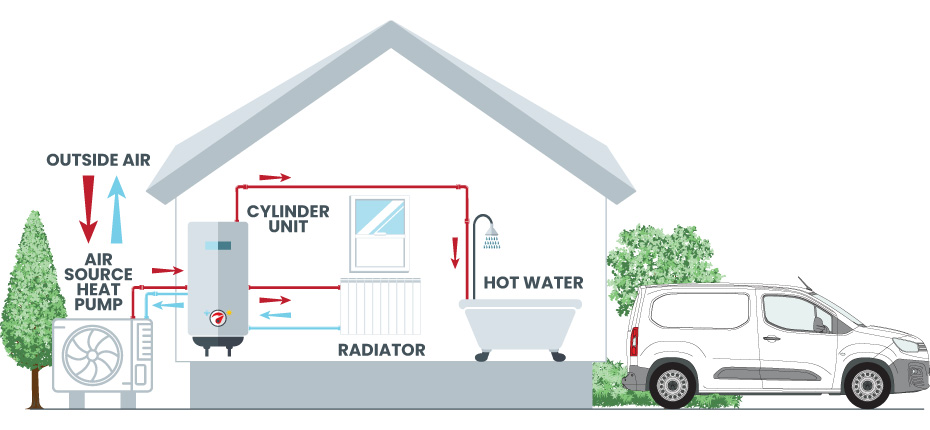
An air source heat pump takes heat from the air outside your home and uses it to provide heating and hot water indoors.
Even in cold weather, the air still contains usable heat energy. A heat pump captures this energy and boosts it to a higher temperature so it can be used within your heating system.
Unlike gas or oil boilers, heat pumps are powered by electricity and do not rely on burning fuel. This makes them a much cleaner option for home heating.
In the right conditions—particularly in well-insulated homes—heat pumps can deliver several units of heat for every unit of electricity consumed, making them highly efficient compared to traditional systems.
How Air Source Heat Pump Technology Works
Although the technology might sound complex, the basic principle is straightforward. Two familiar comparisons can help explain it.
A Fridge in Reverse
A refrigerator works by removing heat from inside and releasing it externally.
A heat pump does the opposite. It gathers heat from outside and transfers it into your home. This is achieved using a refrigerant that can absorb heat at low temperatures and release it at higher temperatures.
Increasing Temperature Through Compression
If you’ve ever pumped up a bicycle tyre, you may have noticed the pump warming up. This is because compressing air raises its temperature.
Heat pumps use this same idea:
- Heat energy is drawn from the outside air
- A refrigerant absorbs this heat and turns into a gas
- The gas is compressed, which increases its temperature
- The heat is then transferred into your home’s heating system
- The refrigerant cools down, returns to liquid form, and the cycle continues
This continuous loop allows the system to produce more heat energy than the electrical energy it uses.
Seasonal Demand in the UK
Heating systems in the UK are used most intensively during the colder months, particularly:
- December
- January
- February
During this period, a heating system needs to operate efficiently and consistently. That’s why correct system design is so important.
A properly specified heat pump will be matched to the size and insulation levels of your home, ensuring it performs effectively even in low outdoor temperatures.
Modern systems are built to cope with winter conditions and continue working efficiently even when temperatures drop below freezing.
Why More Households Are Choosing the Air Source Heat Pump
Air source heat pumps offer several important advantages:
Reduced Environmental Impact
They produce far fewer carbon emissions than traditional fossil fuel heating systems.
Excellent Efficiency Levels
Heat pumps can achieve efficiencies of 300% or more, meaning they generate multiple units of heat from a single unit of electricity.
Consistent Heating and Hot Water
They provide a steady and reliable source of warmth and hot water throughout the year.
Access to Financial Incentives
Government schemes, including the Boiler Upgrade Scheme (BUS), can help lower the initial cost for eligible homeowners.
Keeping Your System Running Efficiently
To get the best performance from a heat pump, routine maintenance is important.
Ongoing servicing helps to:
- Maintain efficiency levels
- Prevent potential issues
- Prolong the lifespan of the system
- Ensure dependable operation during winter months
HEART can advise on best practices to keep your air source heat pump running smoothly.

Why Work with HEART?
HEART is committed to supporting households in adopting energy-efficient, low-carbon heating systems. Our approach focuses on designing solutions that suit each individual property, ensuring the system delivers reliable performance and long-term value.
From initial guidance through to installation, we provide clear, practical support to help you make informed decisions about your home heating.
Take the Next Step Towards Low-Carbon Heating
If you’re exploring alternatives to traditional heating systems, an air source heat pump is well worth considering.
HEART can guide you through the available options, explain funding opportunities such as the Warm Homes Plan, and help you move towards a more efficient and environmentally friendly way of heating your home.
Contact us today to find out how switching to a heat pump could benefit your property and reduce your energy use over time.