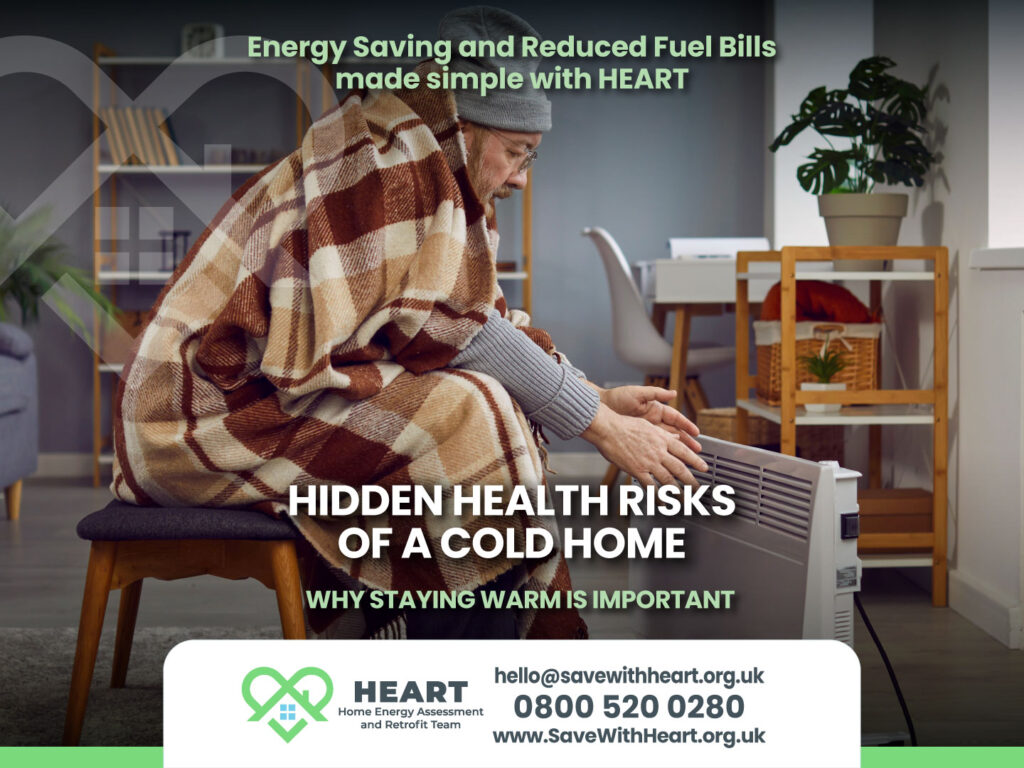
The Hidden Health Risks of a Cold Home – And Why Staying Warm Is So Important
A warm home is about much more than comfort. It plays an essential role in protecting our physical health, supporting mental wellbeing and creating a healthier place to live.
When temperatures inside a home fall below 18°C, the effects can go far beyond simply feeling cold. Prolonged exposure to low indoor temperatures can increase the risk of certain health problems, particularly for older people, young children and anyone living with an existing medical condition.
At HEART, we believe everyone deserves to live in a home that is warm, comfortable and energy efficient. Understanding the connection between housing conditions and health is an important step towards making that possible.
How Can Living in a Cold Home Affect Your Health?
The temperature of our homes can have a significant influence on our everyday health. While we might associate cold weather with seasonal illnesses, living in a poorly heated property can contribute to more serious and longer-lasting problems.
1. Increased Risk of Heart and Circulatory Problems
When we become cold, our bodies naturally work harder to maintain their temperature. Blood vessels narrow to conserve heat, which can increase blood pressure and place additional strain on the heart.
Prolonged exposure to cold indoor conditions can increase the risk of cardiovascular problems, including heart attacks and strokes, particularly among older adults and those with existing heart conditions.
Maintaining a comfortably warm indoor environment helps reduce the physical stress associated with cold temperatures.
2. Breathing Difficulties and Respiratory Illnesses
Cold and damp conditions can make existing breathing problems worse, especially for people living with asthma, bronchitis or other respiratory conditions.
Homes that are difficult to heat are also more likely to experience condensation, damp patches and mould growth, particularly where ventilation is inadequate.
Mould spores and other indoor allergens can irritate the airways, trigger asthma symptoms and contribute to respiratory problems. Children are particularly vulnerable, as their lungs are still developing.
Keeping a home adequately heated, alongside effective ventilation and moisture management, can help create a healthier indoor environment.
3. The Impact on Mental Health and Wellbeing
The consequences of a cold home are not always visible.
Constantly worrying about heating costs, struggling to stay comfortable or living with persistent damp and mould can affect a person’s emotional wellbeing.
For households already facing financial difficulties, these pressures may contribute to anxiety, stress and social isolation.
A warm, welcoming home can make a meaningful difference, providing a comfortable environment in which to relax, spend time with family and enjoy everyday life.
4. Greater Health Risks During Winter
During the colder months, people living in inadequately heated homes can face an increased risk of illness and complications from existing health conditions.
Cold housing is recognised as an important public health concern in the UK, particularly because of its association with winter illness and excess winter deaths.
Improving the warmth and energy efficiency of homes can help protect vulnerable residents and reduce some of the health risks associated with prolonged exposure to cold conditions.
What Is a Healthy Temperature for Your Home?
UK public health guidance generally recommends maintaining indoor temperatures of at least 18°C during colder weather, particularly for people who are older, less mobile or living with long-term health conditions.
Some individuals, including young children and people with particular medical needs, may benefit from warmer temperatures.
The National Institute for Health and Care Excellence (NICE), through its guidance on excess winter deaths and illnesses associated with cold homes (NG6), highlights the importance of identifying people at risk and helping them access appropriate heating and energy efficiency support.
Keeping your home at a suitable temperature is therefore an important part of maintaining good health, rather than simply a matter of personal comfort.
Can an Air Source Heat Pump Help Create a Healthier Home?
Improving a property’s heating system can make a real difference to how comfortable and manageable it is to live in.
One option increasingly being adopted across the UK is the air source heat pump, a modern heating technology designed to provide efficient, reliable warmth.
Rather than generating heat by burning gas or oil, an air source heat pump extracts heat from the outside air and transfers it into the home.
When correctly designed and installed, this technology can offer several advantages for household comfort, energy efficiency and wellbeing.
1. A Heating System Without On-Site Combustion
Traditional gas and oil boilers generate heat by burning fuel. Air source heat pumps work differently, using electricity to transfer naturally occurring heat from the outdoor air into the property.
This means they do not produce combustion gases at the point of use, removing the need for fuel combustion within the heating appliance.
Although indoor air quality also depends on factors such as cooking, ventilation, cleaning products and moisture levels, moving away from combustion-based heating can contribute to a cleaner household heating system.
2. More Consistent and Comfortable Warmth
Air source heat pumps are generally designed to operate steadily over longer periods, rather than repeatedly delivering short bursts of high-temperature heat.
This approach can help maintain more consistent indoor temperatures throughout the day.
For households that experience uncomfortable fluctuations between hot and cold, a properly designed heat pump system can create a more pleasant living environment.
Consistent warmth is particularly valuable for people who are sensitive to temperature changes or have health conditions that can be aggravated by the cold.
3. Helping to Reduce Condensation and Damp
Cold surfaces and excess moisture are two common causes of condensation in UK homes.
Maintaining a more consistent indoor temperature can help reduce the likelihood of condensation forming on cold walls, windows and other surfaces.
By supporting comfortable indoor temperatures, an air source heat pump may form part of a wider approach to managing damp and mould.
However, heating alone cannot resolve every moisture problem. Adequate ventilation, suitable insulation and addressing the underlying causes of damp remain essential.
Together, these improvements can help create a drier, healthier and more comfortable home.
4. Potential Savings and Less Worry About Heating Costs
For many households, the cost of keeping warm is a major concern.
Air source heat pumps can be highly energy efficient, producing several units of heat for every unit of electricity consumed.
Depending on the property, existing heating system, energy tariff and how the heat pump is operated, this efficiency may translate into lower heating costs.
Financial assistance may also be available to reduce the initial installation expense.
For example, the government’s Boiler Upgrade Scheme (BUS) provides eligible homeowners in England and Wales with a £7,500 grant towards the cost of installing an air source heat pump, with increased support available for certain eligible off-gas-grid properties.
Reducing the financial pressure associated with heating a home can also have a positive effect on household wellbeing.
The Benefits of a Warmer, Healthier Home
Creating a healthy indoor environment involves more than installing a new heating system. The combination of suitable heating, insulation, ventilation and moisture management can deliver lasting improvements.
| Home improvement | Potential health and wellbeing benefit |
| Maintaining temperatures of at least 18°C | Helps reduce health risks associated with prolonged exposure to cold |
| Consistent, comfortable heating | Reduces uncomfortable temperature fluctuations |
| Less damp and mould | Helps limit exposure to irritants that can aggravate respiratory conditions |
| Heating without on-site fuel combustion | Removes combustion emissions from the heating appliance |
| Better moisture management and ventilation | Supports healthier indoor air and reduces condensation |
| Improved energy efficiency | May reduce heating costs and associated financial stress |
Why Improving Cold Homes Matters Across the UK
With energy affordability remaining an important issue for many households, ensuring homes are adequately heated continues to be a national priority.
Health organisations, including the NHS, NICE and public health authorities, recognise the relationship between cold housing, poor health and increased pressure on healthcare services.
At the same time, government initiatives are helping households improve their properties through energy efficiency measures and low-carbon heating technologies.
Changes to planning rules introduced in England in May 2025 have also made it easier for many homeowners to install air source heat pumps without submitting a planning application, provided the relevant conditions are met.
Alongside schemes such as the Boiler Upgrade Scheme, these developments are helping make energy-efficient home improvements more accessible.
The benefits extend beyond reducing carbon emissions. Better housing conditions can support healthier communities, improve everyday comfort and help households manage their energy use more effectively.
How HEART Can Help You Create a Warmer, More Energy-Efficient Home
At HEART, we understand that every home is different, and improving its warmth and energy efficiency starts with identifying the right solutions for the property and the people living in it.
Whether you are struggling with an inefficient heating system, concerned about rising energy costs or looking to make your home more comfortable, we can help you explore suitable improvements.
Through our home energy expertise, we can provide guidance and support with:
- Home energy assessments: Understanding how your property uses and loses heat, and identifying opportunities for improvement.
- Energy-efficient heating: Exploring suitable low-carbon heating options, including air source heat pumps.
- Insulation and ventilation: Identifying measures that can improve heat retention while helping to manage moisture and indoor air quality.
- Government funding and grants: Helping you understand the financial support that may be available, subject to eligibility.
- Professional installation: Supporting access to appropriately qualified installers and solutions suited to your home’s requirements.
Our aim is to help households make informed decisions about their homes, with practical advice and improvements that can deliver meaningful long-term benefits.
A Warmer Home Can Make a Real Difference
Nobody should have to choose between keeping their home warm and managing their everyday living expenses.
Living in a cold, damp property can affect physical health, emotional wellbeing and overall quality of life. Taking steps to improve heating, insulation and ventilation can help address these challenges while making homes more comfortable and energy efficient.
An air source heat pump may be one way to achieve this, providing reliable, consistent heating without burning fossil fuels in the home.
At HEART, we believe that a healthier home begins with better energy efficiency, dependable heating and the right support to make positive changes possible.
Take the First Step Towards a Warmer, Healthier Home
Are you concerned about the temperature of your home, struggling with high heating costs or considering an upgrade to a more efficient heating system?
HEART is here to help you explore your options.
Contact HEART to find out more about improving your home’s comfort, energy efficiency and long-term wellbeing.